
Three days is enough to see Beijing’s essentials without rushing — if you put the sights in the right order. This route starts with the historic centre, gives the Great Wall a full day of its own, and finishes with temples, gardens and old neighbourhoods. For background on each sight, read our Beijing for First Timers guide alongside this plan; this article is the day-by-day order, the transport between stops, and the practical decisions.
The one booking that shapes the whole route: the Forbidden City. It is normally closed on Mondays, except on public holidays, and tickets must be booked in advance online — recent guides report that booking opens about 7 days ahead, at around 20:00 Beijing time, and that peak-season tickets are around ¥60 and off-peak around ¥40. Prices, release times and last-entry times change, so check the official Palace Museum booking page for your exact date before you lock in this order. If Day 2 of your trip falls on a Monday, swap Day 1 and Day 2: do the Great Wall on the Monday instead, and move the Forbidden City to another day. Do not leave the Forbidden City to a walk-up attempt.
At a glance: the 3-day route
- Day 1 — The central axis: Tiananmen Square, the Forbidden City, Jingshan Park viewpoint, then Wangfujing and hutongs in the evening.
- Day 2 — The Great Wall: a full day at Mutianyu, back in central Beijing for a relaxed dinner.
- Day 3 — Temples and gardens: Temple of Heaven in the morning, the Summer Palace in the afternoon, Qianmen and Dashilan in the evening.
Stay in the centre for all three nights — around Wangfujing, Dongdan, Qianmen or the Nanluoguxiang and Shichahai hutong area — so that you are never more than a short metro ride from the next stop. See our hotel check-in guide for passport registration and deposit questions, and our city transport guide for metro, DiDi and taxi basics.
Day 1 — Tiananmen Square, the Forbidden City and hutongs
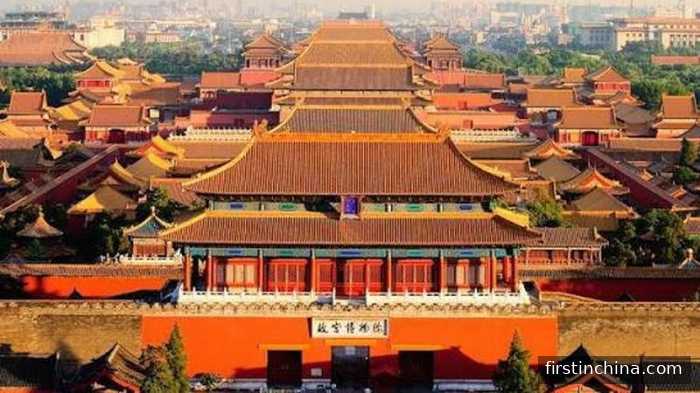
Morning: Tiananmen Square and the Forbidden City. Take metro Line 1 to Tiananmen East or Tiananmen West. Start early: the Forbidden City is large, and a morning start leaves room for its main halls and courtyards without a late-afternoon rush. Bring the passport you used for the booking, and allow extra time for security checks at the square and the palace entrance. Walk the central axis from south to north, then exit at the north gate — this is the natural direction, and it sets up the next stop.
Afternoon: Jingshan Park and the hutongs. Directly across from the Forbidden City’s north gate, Jingshan Park’s hill gives the classic view over the palace roofs. It is a short climb and a good place to get your bearings on the old city. From there, walk or take a short DiDi ride to the Nanluoguxiang hutong area (metro Line 6 or Line 8, Nanluoguxiang station). Wander one or two lanes properly rather than trying to cover every hutong: look for courtyard houses, small shops and snack stalls, and keep to the main lanes in the afternoon heat or rain.
Evening: Wangfujing dinner and a first taste of Beijing food. Take Line 1 to Wangfujing for dinner and an easy first evening — roast duck is the classic Beijing meal, but book ahead if you want a well-known duck restaurant, as popular places fill up. If you prefer something lighter, the hutong lanes and Wangfujing side streets have noodle shops and dumpling restaurants. Pay with Alipay or WeChat Pay where possible; see our Alipay setup guide before you travel. For ticket rules that apply to several stops on this route, see how to buy tickets for the Great Wall, Forbidden City and Terracotta Army.
Transport today: metro Line 1 (Tiananmen East / West, Wangfujing), then Line 6 or Line 8 to Nanluoguxiang. Walking between the square, the palace and Jingshan Park is part of the route — wear comfortable shoes, as the palace alone involves a lot of walking on stone.
Day 2 — Mutianyu Great Wall, a full day
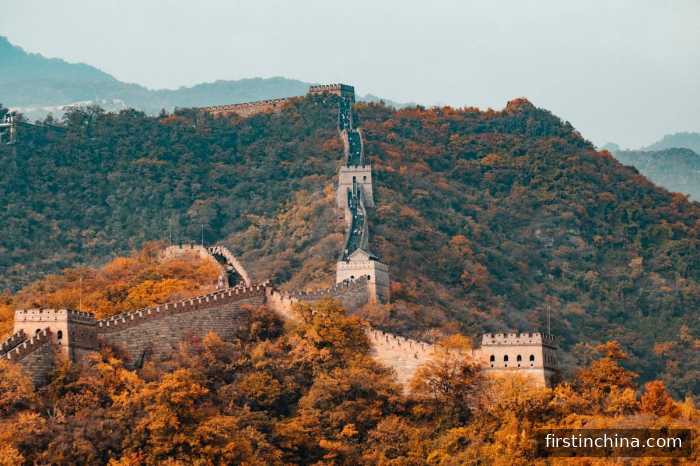
Morning: get to Mutianyu early. Mutianyu is the best first-timer section for most visitors: restored, with cable car and toboggan options, and less crowded than Badaling on a normal day. The honest trade-off is the journey. By public bus, take the 916 Express from Dongzhimen Transport Hub (metro Lines 2 and 13, Dongzhimen) to Huairou, then transfer to a local bus such as the H23 towards Mutianyu; recent guides put the whole journey at about 2.5–3 hours each way including the transfer and waiting, so leave early and check the last return bus on the day. The simpler option for most first-timers is a direct shuttle bus from Dongzhimen or a DiDi / private car, which takes roughly 1.5–2 hours each way depending on traffic — check the fare in the app before you confirm, as it varies with traffic and demand.
Afternoon: walk the wall, then come down the fun way. Allow about 3–4 hours on the wall itself, including stops in the watchtowers. If you take a cable car or chairlift up, the toboggan down is the memorable option for most visitors; if you prefer to walk, pick one direction and enjoy it rather than trying to cover the whole section. Bring water, sun protection and a layer for wind on the ridge, even on a warm day in the city. Check the last cable car and last bus times before you start walking, so the return is not a rush.
Evening: a light dinner back in the centre. After a long day, keep the evening simple: dinner near your hotel, or in Sanlitun if you want a livelier area with plenty of restaurant choices (metro Line 10, Tuanjiehu, or a short DiDi ride). Do not plan a second major sight for this evening — the Wall day is tiring enough on its own.
Transport today: Dongzhimen hub for the 916 Express and shuttle buses, or DiDi / private car booked in advance. If you use DiDi, see our DiDi guide for setting it up with a foreign phone number and payment method before the Wall day, not on the morning itself.
Day 3 — Temple of Heaven, Summer Palace and Qianmen
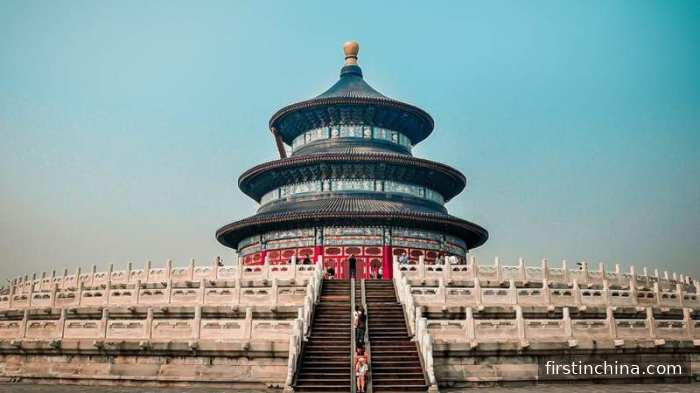
Morning: Temple of Heaven. Take metro Line 5 to Tiantandongmen (Temple of Heaven East Gate). Arrive in the morning, when local visitors practise tai chi, sing and play games in the park — that morning life is part of the experience, not just a backdrop. Walk from the east gate towards the Hall of Prayer for Good Harvests, and allow about 2 hours for the park and its main buildings. This is a calmer start than Day 1, and it pairs well with a slow breakfast of noodles, steamed buns or jianbing (a savoury filled pancake) near your hotel first.
Afternoon: the Summer Palace. Take Line 4 to Beigongmen (North Palace Gate). The Summer Palace is a lakeside garden complex, not a single building, so plan about 2–3 hours: the lake, Longevity Hill, the Long Corridor and a boat or lakeside walk if the weather is good. Allow roughly 35–45 minutes by metro from the Temple of Heaven area, including the change, and check the last-entry time on the day, as large gardens close their gates earlier than the headline closing time suggests.
Evening: Qianmen and Dashilan. Finish in the Qianmen area south of Tiananmen Square (metro Line 2, Qianmen, or Line 8). Dashilan is a historic shopping street with old shops, snack stalls and a very different feel from Wangfujing — a good place for a final dinner, last souvenirs and a walk before you pack. If you still have energy, the Shichahai lakeside area near the Drum Tower is an alternative evening walk, with bars and restaurants around the water.
Transport today: Line 5 to Tiantandongmen, then Line 4 to Beigongmen, then Line 2 or Line 8 to Qianmen. This is the most metro-heavy day, so keep your metro QR code or transport card ready — see our city transport guide if you have not set up metro payment yet.
Where to stay for this route
One base for all three nights works best. The Wangfujing and Dongdan area puts you on Line 1 and close to Day 1; Qianmen puts you south of the square, close to Day 3’s evening stop and to Line 2; the Nanluoguxiang and Shichahai area puts you in the hutongs themselves, close to Lines 6 and 8. Any of the three works — pick the one with the best metro interchange for your arrival station, rather than the cheapest room far from a station. If you arrive by air, check the airport and metro details in the “Arriving in Beijing” section of our Beijing guide: Beijing has two airports (PEK and PKX), and going to the wrong one is a costly mistake.
Practical tips for this itinerary
- Book the Forbidden City first, then build around it. Everything else on this route can be bought or entered more flexibly; the palace cannot, on a busy date.
- Do not add a second big sight to Wall day. Mutianyu plus a temple or palace in one day looks possible on a map and feels exhausting in practice.
- Carry your passport for ticketed sights. Several major Beijing sights use real-name booking, so the name and passport number on the booking must match the document you carry.
- Check times on the day. Opening hours, last entry, last buses and cable car times all vary by season and by day. Treat any time in this article as a guide to planning, not a promise — check the official source or the station display on the day.
- Keep cash as a backup, but expect to pay by phone. Metro, buses, restaurants and small shops mostly take phone payment; a small amount of cash covers the exceptions. See our money guide for daily costs and ATM notes.
- If you have a fourth day, use it for the Lama Temple and Confucius Temple area, the 798 Art District, or a slower hutong and food day — or follow the Beijing leg of our China 10-day itinerary if you are continuing to Xi’an and Shanghai.
Last updated: October 2026. Prices, hours and transport times in China change without notice — check the official source for your travel date.
See also: How to Get Around Beijing for First Timers.